
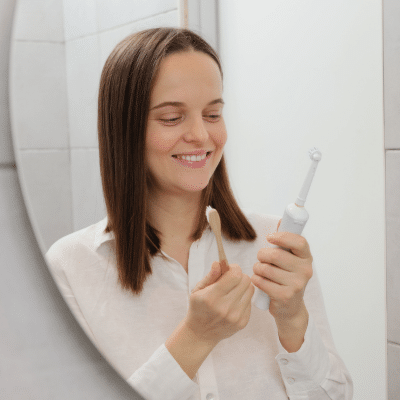
 Choosing the right toothbrush isn’t just a matter of preference; it’s a foundational part of your daily oral hygiene routine. At Go Dental in Valencia, CA, we believe strong, healthy teeth start with good habits at home. While both electric and manual toothbrushes can clean your teeth, understanding the differences between them can help you make the best choice for your smile. This guide explores electric vs manual toothbrushes so you can determine which is right for you.
Why Toothbrushing Matters
Before we compare toothbrush types, let’s remember why brushing matters in the first place. Daily brushing twice a day and flossing once a day are essential to remove plaque, the sticky biofilm that harbors bacteria and causes cavities and gum disease. Healthy brushing habits also protect your enamel and help prevent issues like gingivitis and bad breath.
Whether you use a manual or electric brush, one of the most common mistakes we see at Go Dental is brushing too hard, which can wear down enamel and irritate gums. The key is not about bristles alone. It’s about how you use them. Understanding electric vs manual toothbrushes helps you avoid these common pitfalls.
Manual Toothbrushes: Simple, Affordable, Effective
For decades, the classic manual toothbrush has been the go-to tool for oral care. Made up of a plastic handle and bristles of varying firmness, a manual brush does exactly what it’s supposed to do: it scrubs teeth and stimulates gums when used properly.
Advantages of Manual Brushes
- Affordable and accessible. Manual brushes are inexpensive and available nearly everywhere.
- Lightweight and travel-friendly. No batteries or charging means you can grab one and go.
- Total control over brushing. You decide the pressure, angle and speed, which can be a benefit if you already have great technique.
Limitations to Consider
- Technique matters. Without the right motion and timing, you may miss plaque along the gumline or between teeth.
- No built-in timers. It’s easier to rush through brushing without knowing if you’ve hit the dentist-recommended two full minutes.
Manual brushes can be very effective when used consistently and correctly. For many patients, they continue to serve that purpose well. Still, considering the debate of electric vs manual toothbrushes, some may find an electric brush helpful to improve consistency.
Electric Toothbrushes: A High-Tech Clean
Electric toothbrushes have become increasingly popular, and it’s easy to see why. These powered brushes take some of the guesswork out of brushing by delivering automatic motion, whether through rotating, vibrating, or oscillating bristles.
Benefits of Electric Brushes
- Consistent motion. The brush head does the work for you, helping ensure broad coverage and thorough plaque removal.
- Built-in timers and sensors. Many models remind you when you’ve hit the recommended two minutes and may alert you if you’re brushing too hard, a big help for building better habits.
- Easier for limited dexterity. For kids, seniors, or people living with arthritis or mobility challenges, electric brushes can be gentler and easier to handle.
Points to Consider
- Higher cost. Electric toothbrushes typically have an upfront investment and require periodic replacement heads.
- Maintenance required. You’ll need to recharge or replace batteries and change brush heads regularly (ideally every three to four months or sooner if the bristles are frayed).
When evaluating electric vs manual toothbrushes, many patients notice that electric brushes remove plaque more effectively and simplify brushing.
Electric vs Manual Toothbrushes: So, Which One Is Best?
The answer? The best choice really depends on your personal habits, oral health goals and comfort level. Both manual and electric toothbrushes are capable tools, but the right choice is the one you’ll use properly every time you brush.
Here’s what to consider when deciding between electric vs manual toothbrushes:
- Your Brushing Technique: How you brush matters more than the type of brush you hold. Using gentle, circular motions and brushing every surface of each tooth is essential, whether your brush is powered or manual. Avoid aggressive back-and-forth scrubbing. It can damage enamel and irritate gums.
- Consistency and Coverage: If you struggle with timing or reaching all areas of your mouth, an electric toothbrush with a timer and ergonomic design may give you an edge. If you already brush thoroughly for two minutes twice a day with great technique, a manual brush might work just fine. Comparing electric vs manual toothbrushes comes down to these small but important differences.
- Personal Needs: Electric brushes often help children learn good habits and assist those with dexterity limitations. Manual brushes are simple, affordable, easy to replace and perfect for travel. Both options can support excellent preventative care when used correctly, making the discussion of electric vs manual toothbrushes highly personal.
Tips for Toothbrush Success
Whichever style you choose:
- Brush for at least two minutes, twice a day.
- Choose a soft-bristled toothbrush that feels comfortable in your mouth.
- Replace your brush or electric brush head every 3–4 months or when bristles are worn.
- Pair brushing with daily flossing and regular dental visits for a complete oral hygiene routine.
Electric vs Manual Toothbrushes: The Best Brush Is the One You Use Well
When it comes to electric vs manual toothbrushes, the most important factor is how you brush, not just what type of brush you use. Understanding the differences between electric vs manual toothbrushes can help you build better habits and choose the tools that fit your lifestyle and oral health goals. At Go Dental in Valencia, CA, we’re here to guide you every step of the way. Request your appointment today!